The food delivery business has changed how India eats and how restaurants run their kitchens. Apps like Zomato help small and big restaurants reach online customers, manage orders, and deliver food without building their own delivery system. But behind this growth, many restaurant owners are raising concerns about high charges and low profits.
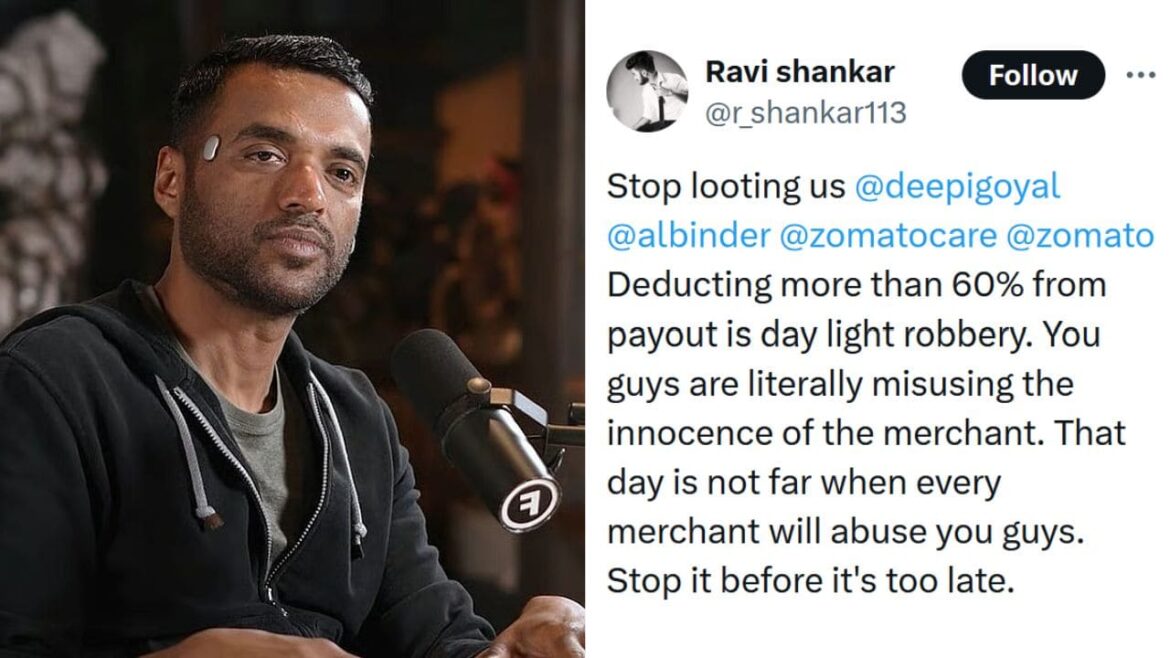
A recent post by a restaurant owner on social media has again started this debate. The merchant claimed that more than 60% of his earnings were deducted by Zomato. After the post went viral, Zomato responded to the complaint.
How the Issue Came to Light
The issue started when a restaurant owner shared his experience on X (formerly Twitter). He said that despite receiving good orders, the final amount credited to him was much lower than expected. According to him, the platform deducted a very large share from his total sales.
The post quickly caught attention because it highlighted a fear many small restaurant owners already have — that online platforms may be earning more than the people who actually cook and serve the food.
Merchant Shares Payment Breakdown
To support his claim, the restaurant owner shared screenshots of his partner dashboard. These screenshots showed the total order value and a long list of deductions made by the platform. The deductions included service fees, delivery-related charges, payment processing fees, taxes, and something labelled as “investment in growth.”
After all deductions, the final payout was less than half of the total order value. This made many people online question how sustainable it is for restaurants to depend heavily on food delivery apps.
Why Such Deductions Worry Restaurant Owners
Running a restaurant already involves high costs like rent, staff salaries, raw materials, electricity, and taxes. When a large portion of online earnings is deducted, profit margins become very thin. Many small restaurant owners feel trapped because leaving these platforms could mean losing customers, but staying may reduce profits.
This is why such complaints often receive strong support from other merchants and the public.
Zomato’s Response to the Complaint
After the post gained traction, Zomato responded publicly. The company acknowledged the concern and asked the merchant to share his restaurant details through direct message. Zomato said it would review the case and assist further.
While the response did not include a detailed public explanation, it showed that the company was willing to look into the issue and communicate with the partner directly.
Understanding Platform Fees in Food Delivery
Food delivery platforms usually charge restaurants for multiple services. These may include:
- Commission for using the platform
- Delivery and logistics support
- Payment gateway charges
- Marketing or visibility fees
- Taxes and government charges
Platforms argue that these fees cover technology, customer acquisition, delivery infrastructure, and promotions. However, many restaurant owners feel the charges are not always clearly explained or predictable.
Growing Demand for Transparency
This incident has once again raised questions about transparency in platform-based businesses. Restaurant owners are demanding clearer explanations, simpler fee structures, and better communication. Many believe that long-term growth of the food delivery industry depends on fair partnerships, not just customer discounts.
Experts also say that if small restaurants fail due to high costs, platforms may lose variety and trust in the long run.
Public Reaction on Social Media
Social media users had mixed reactions. Some supported the restaurant owner and called for regulation of aggregator fees. Others said merchants should carefully read agreements before joining platforms. Many users agreed on one point — clarity and fairness are needed on both sides.
Conclusion
The Zomato payout issue highlights a bigger problem in India’s fast-growing digital economy. While food delivery platforms offer reach and convenience, the balance between platform earnings and merchant survival remains delicate. Zomato’s response shows openness to dialogue, but repeated complaints suggest that deeper changes may be needed. For sustainable growth, transparency, trust, and fair sharing of revenue are essential.
FAQs
Why are restaurant owners unhappy with food delivery platforms?
Many owners feel that high commissions and multiple deductions reduce their profits, making it hard to run the business sustainably.
Does Zomato deduct more than 60% from all restaurants?
No. Deductions vary based on agreements, services used, location, and promotions. However, some merchants report very high deductions in certain cases.
What did Zomato say about this complaint?
Zomato acknowledged the issue and asked the merchant to share details privately so the matter could be checked.
Can restaurants survive without delivery apps?
Some can, but many rely on these platforms for visibility and online orders, especially in big cities.
What can improve this situation?
Clear fee structures, better communication, and balanced partnerships between platforms and restaurants can help both sides grow.