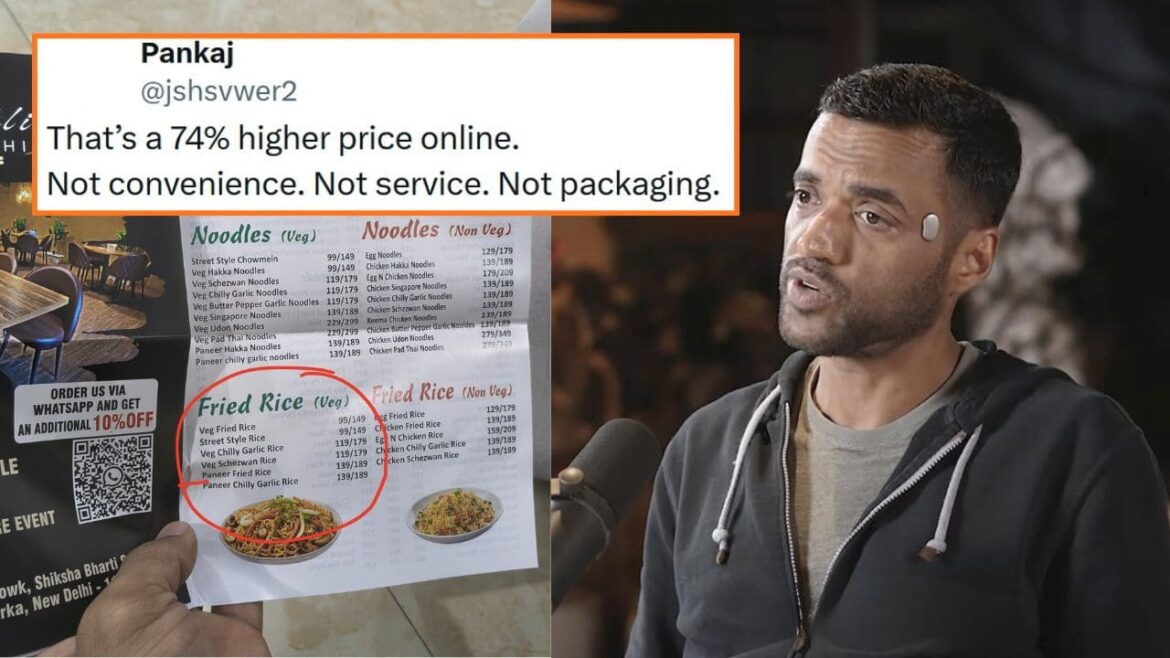
A recent incident has raised fresh questions about food pricing on delivery apps. A customer was surprised when he noticed that the paneer fried rice he ordered online cost much more than the price mentioned on the restaurant’s printed menu.
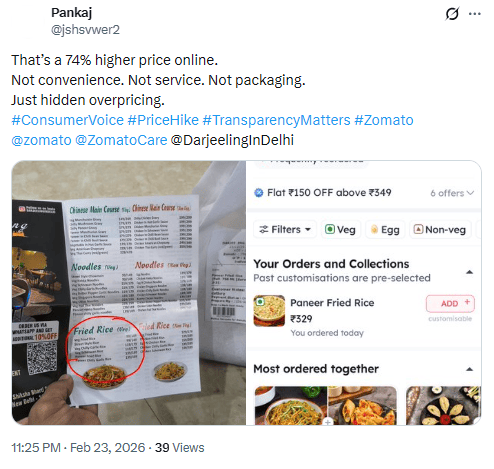
He had paid ₹329 through the app, but the printed menu inside the delivery packet showed the same item priced at only ₹189. This means the online price was around 74% higher than the offline price.
The customer shared photos and details on social media, and the post quickly went viral. Many users said they had also noticed similar differences earlier.
Customer Shares His Experience on Social Media
Post Sparks Debate on Transparency
The customer posted screenshots of the bill and menu card to show the difference clearly. He said he felt disappointed and believed customers should know why such a big price gap exists.
Public Reaction
Many social media users supported him. Some said food delivery apps are becoming expensive, while others said convenience comes at a cost.
Some people also said they prefer dining at restaurants now to avoid paying extra charges online.
Zomato Responds to the Complaint
Company Says Restaurant Decides Prices
After the post went viral, Zomato responded to the issue. The company clarified that restaurants themselves decide the prices shown on the app.
Zomato said it would share the feedback with the restaurant partner and look into the matter.
However, the company did not confirm if any action would be taken to reduce the price difference.
Why Online Food Prices Are Often Higher
Commission Charges and Business Costs
Experts say there are several reasons why food prices are higher on delivery apps:
- Restaurants pay commission to delivery platforms
- Packaging costs are added
- Delivery and service charges apply
- Restaurants increase prices to protect their profit
Because of these reasons, online prices are often different from dine-in prices.
Impact on Customers and Trust
Customers Becoming More Careful
- This incident has made many customers more aware. People are now checking prices carefully before ordering.
- Some customers feel that platforms and restaurants should clearly explain the reason for higher prices.
- Transparency helps build trust, and customers expect honesty from brands.
Growing Food Delivery Market in India
Convenience vs Cost Debate
Food delivery apps have become very popular in India, especially in big cities.
People enjoy:
- Easy ordering
- Fast delivery
- Variety of food options
But incidents like this show that convenience sometimes comes with extra cost. Customers now want better clarity about pricing.
Conclusion
The recent price difference incident has once again highlighted the gap between online and offline food prices. While food delivery apps offer great convenience, customers are becoming more aware of hidden costs.
Zomato has said that restaurants decide the prices, but the incident has started an important discussion about transparency.
In the future, clear pricing and honest communication will be important to maintain customer trust in the growing food delivery industry.
FAQs
Why are food prices higher on delivery apps?
Prices are higher because restaurants pay commission, packaging costs, and other service fees. To manage these costs, restaurants increase online prices.
Does Zomato decide food prices?
No, according to Zomato, restaurants themselves decide the prices listed on the platform.
Is it cheaper to eat at the restaurant?
In many cases, yes. Dining at the restaurant can be cheaper because there are no delivery or platform charges.
What should customers do before ordering online?
Customers should compare prices, check total cost including taxes and delivery, and decide if the price is worth the convenience.
Will food delivery prices become cheaper in future?
It depends on competition, platform policies, and restaurant decisions. More transparency may help customers get better value.