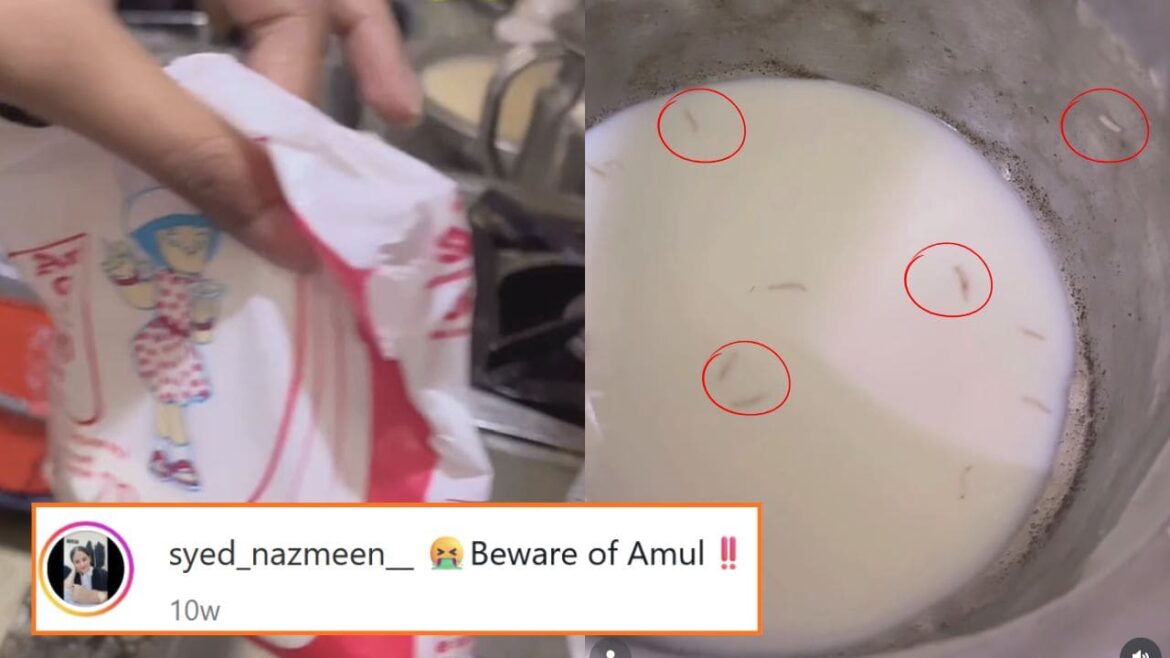
A fresh social media controversy has put dairy brand Amul in the spotlight after a customer allegedly found a worm-like object in a packet of milk. The matter gained attention after a video started spreading online, showing unusual particles in milk while it was being heated at home.
The clip quickly caught the attention of internet users, and many people began questioning packaged food safety and quality control. After the video went viral, Amul responded publicly and said its team had taken note of the complaint and would look into the matter.
Viral Video Triggers Fresh Food Safety Concerns
The issue began when a video was shared online showing milk being poured into a utensil and heated. During the heating process, some small floating objects could be seen in the milk. The person recording the video claimed these looked like worm-like or insect-like particles.
As soon as the clip started getting views, many social media users reacted with shock. Some people said they had lost trust in packaged products, while others demanded a proper investigation into the matter.
This incident has once again started a larger discussion about hygiene in packaged food products. In today’s busy lifestyle, many families depend on branded milk and other packed items every day. That is why even one such complaint can create panic among consumers.
Amul Says It Has Taken Note of the Complaint
After the video spread widely, Amul replied to the complaint online. The company said it had received the details and that its team was already looking into the issue. It also indicated that the customer would be contacted soon for further action.
This response was important because it showed that the brand did not ignore the complaint. In food-related matters, quick communication matters a lot. When a company responds fast, it can help reduce confusion and show that the issue is being treated seriously.
Still, for many consumers, a response alone is not enough. People also want to know what exactly caused the problem and whether other packets from the same batch could be affected.
Why Such Incidents Worry Consumers
Milk is one of the most commonly used food items in Indian homes. It is consumed by children, adults, and elderly people every day. Because of this, any complaint related to contamination immediately becomes serious.
When a customer claims that something unusual was found in packaged milk, the concern is not only about one packet. People start thinking about storage, transport, factory hygiene, sealing quality, and whether the product was safe before it reached the shop.
In my opinion, this is why food complaints become much bigger than normal product complaints. A damaged mobile phone or broken home item can be replaced, but food safety issues directly affect health and trust.
Possible Reasons Behind Such Complaints
There can be many possible reasons in such cases, and it is important not to jump to conclusions before a proper investigation. The issue may come from contamination during packaging, handling problems during transport, damage in storage conditions, or even changes after the packet reaches the customer.
Sometimes, poor refrigeration or improper storage at a local shop can also affect milk quality. In other situations, a torn or weak seal may allow external contamination. That is why a scientific inspection of the packet, batch details, and sample testing is very important.
This is also why social media videos should be taken seriously, but final judgment should be based on proper examination.
Internet Reactions Were Fast and Strong
As expected, the internet reacted very strongly to the video. Many users expressed anger and disappointment. Some said stricter quality checks are needed in the food industry. Others called for better monitoring of products before they reach the market.
Social media often turns such incidents into viral debates within minutes. Once a trusted household brand becomes part of a controversy, public reaction becomes even stronger. That is what happened here as well.
At the same time, online outrage can sometimes move faster than verified facts. So while public concern is understandable, clear investigation and official follow-up remain necessary.
Trusted Brands Face Bigger Pressure
Amul is one of the best-known dairy brands in India, and that is exactly why such an allegation becomes major news. Large brands are expected to maintain strong hygiene standards and quick complaint resolution systems.
When a smaller unknown brand faces a complaint, the matter may remain local. But when a popular national brand is involved, people expect full transparency. Consumers want to know whether the issue was isolated or part of a bigger quality failure.
In fact, well-known brands face more public pressure because people have trusted them for many years. A single viral complaint may not define the company, but how the company handles it can affect its image.
Food Safety Needs More Than Just Branding
This incident is a reminder that strong branding alone is not enough in the food business. Consumers today want quality, safety, and accountability. They also expect brands to act quickly when complaints appear online.
Companies in the packaged food sector must ensure proper quality checks at every stage — production, storage, transport, and retail supply. Even one weak point in this chain can create a serious issue.
In my view, brands should also educate customers on how to store milk properly after purchase. Sometimes consumers may not know that delays in refrigeration or poor handling can also change product quality.
What Consumers Should Do in Such Cases
If a customer finds anything unusual in a food packet, the first step should be to stop using the product immediately. The packet should be kept safely, along with batch number, packaging date, and purchase details, so that the company can inspect it properly.
It is also helpful to record clear photos or video as proof. A complaint should then be made to the company and, if needed, to food safety authorities. Public posts on social media may spread awareness, but formal complaint channels are equally important for real action.
This helps investigators trace whether the problem came from production, transportation, storage, or local handling.
Conclusion
The controversy involving the alleged worm-like object in Amul milk has once again highlighted how sensitive food safety issues are in India. Since milk is a daily-use product in most homes, even one viral complaint can create major concern among consumers.
Amul has responded and said it is looking into the matter, which is the right first step. But the real test will be in the outcome of the investigation and how clearly the company communicates its findings.
From a wider perspective, this case shows the growing power of social media in holding brands accountable. It also reminds all food companies that consumer trust must be protected through strict quality control, fast response, and full transparency.
FAQs
What is the Amul milk controversy about?
The controversy started after a video went viral in which a customer claimed that worm-like or insect-like particles were seen in packaged milk while it was being heated.
How did Amul respond to the complaint?
Amul replied that it had received the details of the complaint and that its team was looking into the issue. The company also said the customer would be contacted.
Does this mean all Amul milk packets are unsafe?
No, one viral complaint does not automatically mean all packets are unsafe. A proper investigation is needed to find out the exact cause and whether it was an isolated case.
What can cause such problems in packaged milk?
Possible reasons may include contamination during packaging, storage issues, transport problems, damaged seals, or handling mistakes after the product was sold.
What should a customer do after finding something suspicious in food?
The customer should stop using the product, keep the packet safely, note the batch and purchase details, take photos or video, and report the matter to the company or food safety authorities.
Why do such videos become viral so fast?
Food safety is a serious issue that affects everyone. Since milk is used daily in many homes, videos involving contamination quickly create strong emotional and public reaction online.