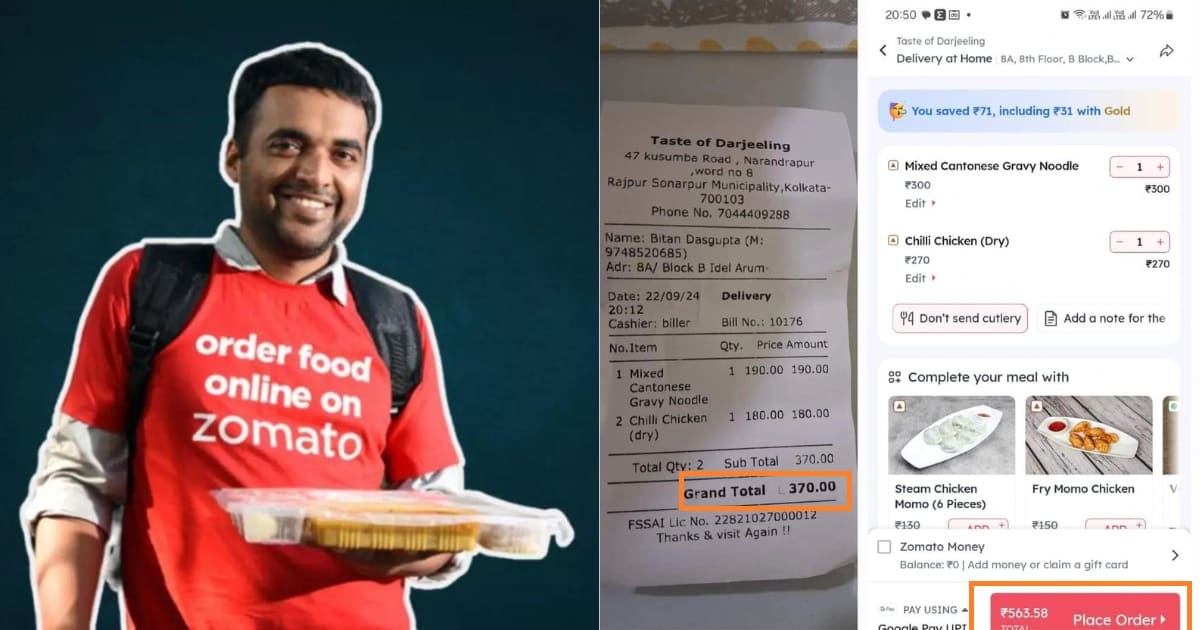
Food delivery apps have made life very easy for people in cities. With just a few taps on a smartphone, anyone can order food from their favorite restaurants and get it delivered at home. However, a recent viral post has raised questions about the price difference between ordering directly from a restaurant and ordering through Zomato.
A customer recently claimed that the same food items cost much more on the app compared to the restaurant’s actual menu price. His post quickly gained attention online and started a debate among internet users.
Food Delivery Apps Have Changed Eating Habits
Over the past few years, online food delivery services have become very popular in India. Apps like Zomato, Swiggy, Uber Eats, and DoorDash allow people to order meals from thousands of restaurants.
These platforms provide convenience, fast delivery, and a wide variety of food options. Many users depend on them daily, especially in busy cities where people often do not have time to cook.
However, this convenience sometimes comes with extra charges.
Customer Notices Big Price Difference
The controversy started when a LinkedIn user named Pratyay Banerjee shared his experience online.
He ordered two dishes through Zomato: dry chili chicken and mixed Cantonese gravy noodles. After receiving the bill, he realized that the prices on the app were much higher than the prices at the restaurant.
According to his comparison:
- The same items cost about ₹370 when ordered directly at the restaurant.
- On Zomato, the total price went up to ₹563.
This means the order cost around ₹193 more through the delivery app.
Individual Dish Prices Were Also Higher
The customer also pointed out that the price of each dish on the app was higher than the restaurant menu.
For example:
- Noodles cost ₹190 at the restaurant but were listed for ₹300 on the app.
- Chili chicken cost ₹180 at the restaurant but was shown as ₹270 on Zomato.
This difference made him question how pricing works on food delivery platforms.
Viral LinkedIn Post Sparks Debate
Pratyay shared a photo of the bill and posted about it on LinkedIn. In a sarcastic tone, he mentioned Deepinder Goyal while criticizing the pricing difference.
The post quickly went viral and attracted many comments from users who shared similar experiences.
Some people agreed with him and said that they also noticed higher prices on food delivery apps. Others explained that the extra cost might be due to commissions charged by the platform, delivery costs, and service fees.
Why Prices Are Higher On Food Delivery Apps
Experts say that many restaurants increase prices on delivery platforms to cover the commission they pay to the app. Food delivery companies usually charge restaurants a percentage for each order.
To balance these costs, restaurants sometimes raise menu prices on the app compared to the prices in the physical restaurant.
In addition to this, delivery charges, packaging fees, and platform service fees can also increase the final bill.
Growing Demand For Transparency
Incidents like this have started discussions about transparency in online food pricing. Many customers believe that apps should clearly explain why prices are higher.
Some users also suggested that platforms should show the original restaurant price along with the delivery price so customers can make informed decisions.
As food delivery apps continue to grow, clear communication about pricing will become even more important for maintaining customer trust.
Conclusion
The viral post about Zomato’s pricing difference highlights a common concern among food delivery users. While these apps offer great convenience, the higher prices compared to restaurant menus often surprise customers.
The debate also shows that people want more transparency in how online food delivery platforms calculate their prices. As digital food ordering becomes a normal part of daily life, both restaurants and delivery apps may need to provide clearer information to maintain customer confidence.
FAQs
Why are food prices higher on delivery apps like Zomato?
Prices can be higher because restaurants pay commission to the platform, and there may also be delivery fees, packaging charges, and service fees added to the bill.
Who raised the complaint about Zomato pricing?
A LinkedIn user named Pratyay Banerjee shared his experience online and compared restaurant prices with the prices shown on the Zomato app.
Is it common to see price differences on food delivery apps?
Yes, many users have noticed that menu prices on delivery platforms can be higher than restaurant prices.
Why do restaurants increase prices on delivery platforms?
Restaurants sometimes raise prices to cover the commission charged by food delivery companies for each order.
Do all food delivery apps charge higher prices?
Not always, but price differences can happen depending on the restaurant’s pricing strategy and additional platform charges.