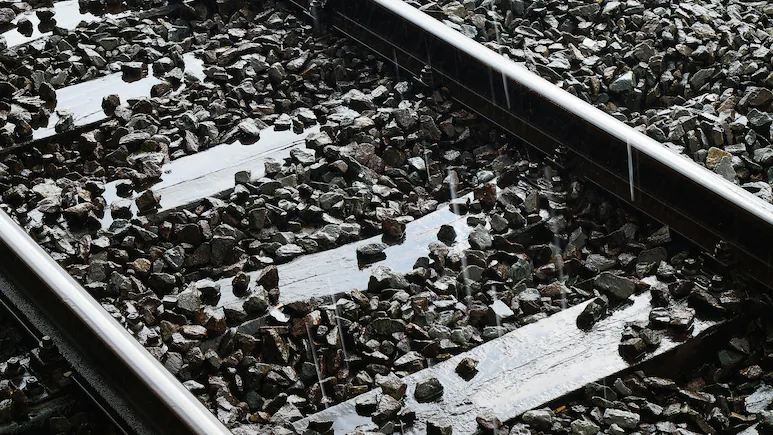
If you have ever seen a railway track, you must have noticed small grey stones under and around the rails. Many people think these stones are useless or just placed for filling space. But railway officials say these stones play a very important role in train safety.
These stones are called railway ballast, and without them, trains cannot run safely. Here is a full report explaining why these stones are necessary.
These Stones Keep Train Tracks Strong And Stable
They Support Heavy Train Weight
- Trains are extremely heavy. One train can weigh thousands of tons. When such heavy trains run, the pressure on tracks becomes very high.
- The stones spread this weight evenly on the ground. This prevents the tracks from sinking or bending.
They Hold Sleepers In Proper Position
- Sleepers are the concrete blocks placed between rails. Stones help lock these sleepers tightly so tracks do not move from their position.
- This reduces the risk of accidents.
Stones Help Rainwater Drain Easily
Very Useful During Indian Monsoon
- India receives heavy rainfall every year. If water stays on tracks, it can weaken the ground.
- The gaps between stones allow water to flow down quickly.
This Prevents Track Damage
- Proper drainage keeps tracks dry and strong. It also prevents rust and soil damage.
- This is one of the biggest reasons stones are used.
They Reduce Vibration And Noise
Stones Work Like Shock Absorbers
- When trains move fast, they create vibration.
- These stones absorb shock and reduce vibration impact.
This Protects Railway Structure
- Less vibration means less damage to tracks and longer life.
- It also reduces noise for people living near railway lines.
Stones Stop Grass And Plants From Growing
Plants Can Damage Tracks
- If grass grows on tracks, roots can move sleepers and damage alignment.
- Stones do not allow plants to grow easily.
This Helps Maintain Safety
Clean tracks reduce maintenance problems and improve safety.
Maintenance Becomes Easier With Stones
Easy To Repair Tracks
Railway workers can remove and adjust stones easily during repair work.
This makes maintenance faster and cheaper.
Indian Railways Replace Stones Regularly
Experts say ballast is cleaned or replaced after some years to maintain safety.
This keeps railway system efficient.
Why These Stones Are Usually Grey In Colour
Grey Stones Are Strong And Durable
Most stones are made from granite or basalt.
These stones are naturally grey and very strong.
They Last For Many Years
These stones do not break easily under heavy train pressure.
This makes them perfect for railway use.
Expert Fact: Without These Stones, Train Travel Would Be Dangerous
Railway engineers say running trains without ballast can cause track movement, accidents, and derailments.
These small stones are actually one of the most important parts of railway infrastructure.
They may look simple, but they protect millions of passengers daily.
Conclusion
Small stones under train tracks are not placed randomly. They play a major role in safety, stability, drainage, and maintenance. They help tracks handle heavy weight, reduce vibration, and prevent damage.
Indian Railways depends on these stones to ensure safe and smooth travel. Next time when you see railway tracks, remember these stones are silently protecting every train journey.
FAQs
What are the stones on railway tracks called?
They are called railway ballast.
Why are stones used instead of sand?
Stones are stronger and allow better drainage. Sand can move easily and is not stable.
How often are these stones replaced?
They are cleaned or replaced after several years depending on track condition.
Can trains run without these stones?
It is very unsafe. Without stones, tracks can shift and cause accidents.
Why are railway stones sharp?
Sharp edges help stones lock together tightly and provide strong support.
Are these stones used in all countries?
Yes, railway ballast is used worldwide for safe train operations.