Indian Railways is often described as the lifeline of the country. It connects small towns, villages, and big cities and carries millions of passengers every day. Over the years, Railways has introduced online ticket booking, modern trains, better tracks, and safety systems like Kavach. Still, some safety gaps continue to appear, raising serious questions.
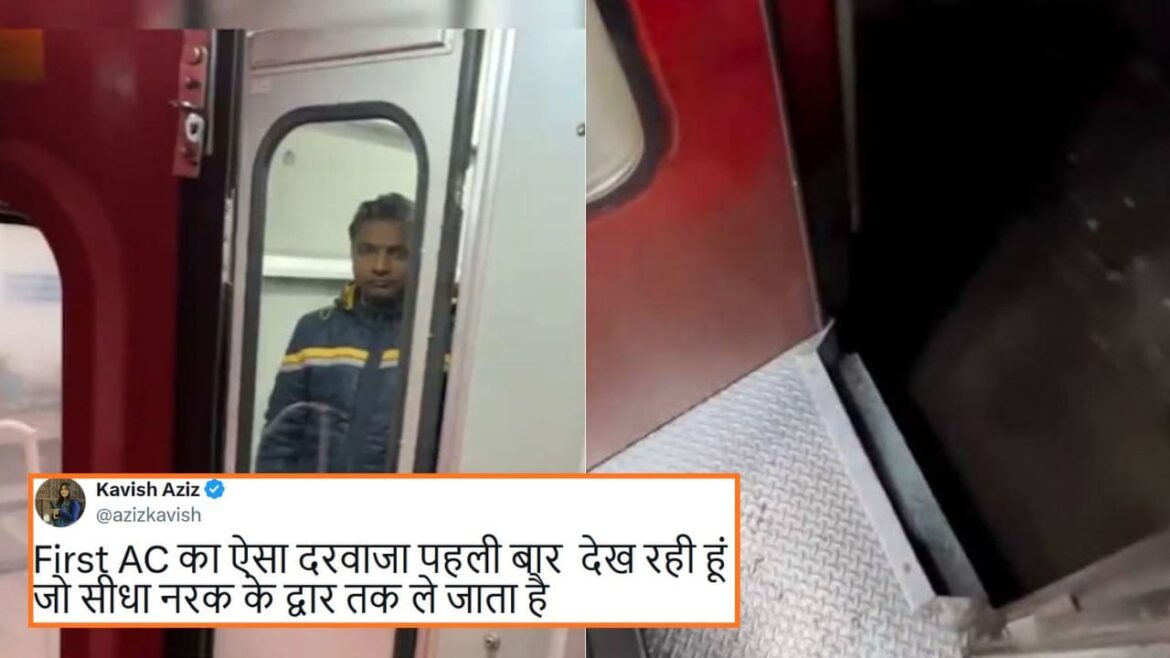
A recent viral video has once again brought passenger safety into focus. This time, the issue was linked to the design of a First AC coach gate, which many users called risky and poorly planned.
Viral Video Exposes Risky Gate Design
The issue came to light after a social media user shared a video showing the inside gate of a First AC coach. According to the video, the gate opened directly towards the main exit door of the coach. This meant that if a passenger opened the gate casually, they could unknowingly step outside the coach, especially when the train was moving.
Many users felt this design could easily cause a serious accident. The post quickly went viral and triggered strong reactions from passengers and safety experts alike.
Why the Design Raised Serious Concerns
Passengers pointed out that First AC coaches are considered premium and safe. A small design mistake in such coaches raises doubts about how safety checks are done before new designs are approved. People also worried about elderly passengers, children, and first-time travellers who might not expect such a risky layout.
In a moving train, even a small mistake can lead to severe injuries. That is why many users demanded immediate action instead of excuses.
Indian Railways Takes Quick Action
After the issue gained attention online, Rail Coach Factory (RCF) Kapurthala responded publicly. The authorities accepted that the concern was genuine and confirmed that corrective steps were already being taken.
Railways informed that the coach design has now been modified. The correction will be applied not only to future coaches but also to existing ones. A demonstration video was also shared to show how the gate issue has been fixed.
This quick response helped calm public anger and showed that social media feedback can lead to real change.
Netizens React to the Railway’s Response
Social media users welcomed the fast action taken by Indian Railways. Many praised the authorities for acknowledging the mistake instead of ignoring it. At the same time, several users questioned how such a flaw passed multiple levels of inspection in the first place.
Some netizens demanded stricter safety audits and better testing before coaches are allowed to carry passengers.
Role of Social Media in Raising Safety Issues
This incident clearly shows how powerful social media has become. A single video was enough to force authorities to act within hours. In today’s time, passengers are not just travellers but also watchdogs who can highlight problems instantly.
However, experts believe that Railways should rely less on viral outrage and more on regular safety reviews to prevent such risks early.
Conclusion
The First AC coach gate issue is a reminder that safety must always come before design or comfort. While Indian Railways deserves credit for responding quickly, the incident also highlights the need for stronger safety checks before new designs are introduced. Proactive inspections and passenger-focused planning can help avoid such risks in the future and ensure safer journeys for everyone.
FAQs
What was the safety issue in the First AC coach?
The inner gate opened directly towards the coach exit, which could cause passengers to step out unknowingly.
Who highlighted the problem first?
A social media user shared a video online, which quickly went viral.
How did Indian Railways respond?
Rail Coach Factory Kapurthala acknowledged the issue and fixed the design for both new and existing coaches.
Is the problem fully resolved now?
According to Railways, corrective measures have been implemented, and the design has been modified.
Why is this incident important?
It highlights the need for better safety checks and shows how public feedback can improve infrastructure safety.