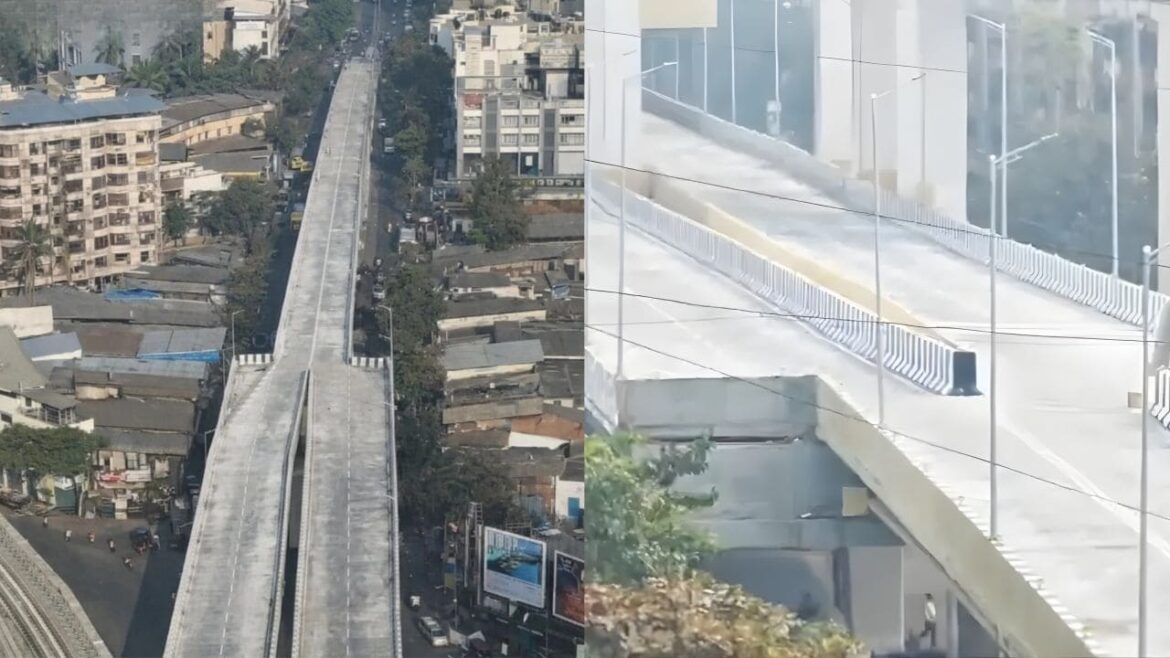
A newly constructed flyover in Mira-Bhayander has sparked massive debate online after a video showed four lanes abruptly narrowing into two. What was planned to reduce traffic congestion has instead raised serious questions about planning, safety, and accountability. As the visuals went viral, the government and concerned authorities were forced to respond.
Viral Video Triggers Public Anger And Political Reaction
The controversy began when an aerial video of the flyover under Mumbai’s Metro Line 9 project surfaced on social media. The clip clearly showed a wide four-lane road suddenly shrinking into just two lanes. Many commuters expressed fear and confusion, asking how such a design could ensure smooth and safe traffic flow.
Soon after, opposition parties picked up the issue, calling it an example of poor infrastructure planning. Social media users flooded comment sections with sarcastic remarks, memes, and serious safety concerns.
Opposition Targets Maharashtra Government Over Flyover Design
The Indian National Congress shared the video on its official social media handle, criticising the state government sharply. The party questioned how such a flyover could be approved and warned that sudden lane reduction could lead to accidents and traffic chaos.
Leaders claimed that infrastructure projects are being rushed without proper planning, putting common citizens at risk. The issue quickly turned from a civic problem into a political flashpoint.
MMRDA Explains Why Four Lanes Become Two
After days of criticism, the Mumbai Metropolitan Region Development Authority (MMRDA) finally clarified the situation. According to the authority, the flyover design is intentional and based on future planning, not a mistake.
MMRDA explained that the current flyover has two lanes meant for Bhayander East. The remaining two lanes are planned for a future extension towards Bhayander West, which will be constructed later due to space and alignment constraints.
Future Expansion And Safety Measures Promised
MMRDA assured commuters that provisions for future widening are already part of the project plan. Once approvals are received, the flyover will be expanded by adding extra lanes on both sides.
To address safety concerns, the authority stated that several precautions have been taken, including clear signage, rumble strips, crash barriers, and reflective road markers. Traffic police inputs will also be considered before opening the flyover fully to the public.
Aditya Thackeray And Netizens Question Official Explanation
Shiv Sena (UBT) leader Aditya Thackeray reacted strongly to the clarification, questioning why a flyover meant to reduce traffic would create confusion in its current form. He argued that future planning should not inconvenience present-day commuters.
Meanwhile, social media users continued to criticise the project. Many said that common people should not suffer because of “future promises,” and demanded better transparency and accountability in public infrastructure projects.
Why This Flyover Debate Matters To Citizens
This incident highlights a larger issue faced by urban India — rapid construction without clear communication to the public. While authorities may have long-term plans, sudden design changes can confuse drivers and increase accident risks.
Citizens are now demanding clearer planning, better road design explanations, and stricter safety checks before opening such projects.
FAQs
Why did the Mira-Bhayander flyover go viral?
A video showed the flyover narrowing from four lanes to two, raising safety and planning concerns among commuters.
Is the lane reduction a design flaw?
According to MMRDA, it is not a flaw but part of a phased construction plan with future expansion.
Will the flyover be widened later?
Yes, authorities have said additional lanes will be added once further approvals are completed.
Are safety measures in place on the flyover?
MMRDA claims safety features like signage, crash barriers, and rumble strips have been installed.
Has the government accepted any mistake?
No official mistake has been admitted, but authorities have promised better coordination and safety checks.
Conclusion
The Mira-Bhayander flyover controversy shows how quickly public trust can erode when infrastructure projects lack clarity. While MMRDA insists the design is future-ready, citizens remain concerned about present-day safety and convenience. As urban development accelerates, transparent communication and people-first planning will be key to avoiding such backlash in the future.